I work on level 2 at headquarters, in a room that was a meeting room until October. The Office of Recruitment opened on 3 November, and for the first week we had more chairs than desks. We have desks now. We still have more chairs.
Before this I spent seven years in the Communication Office, reading the agency’s mailbox and writing notices. It was good training, because the Communication Office has one rule I’ve kept: answer the question that was asked, in the language it was asked in, within ten working days, and sign it. If you don’t know the answer, say so, and say when you will.
Now I write letters. Some go to trainees in OE whose record the office has begun to read. Those are short, and they wait for people inside the programme rather than turning up at their door. Others go to people the agency is already in touch with. I spend a surprising amount of time on the first sentence. The first sentence of a letter from an organisation you’ve never heard from is really the whole letter. If it’s vague, nobody reads the rest.
What I can say
The honest part of the job is that I often can’t say much. I can say what a role involves, where it is, who will be there. I can’t always say what the programme behind it is for, because that isn’t mine to say. People are surprisingly fine with that, as long as you don’t pretend. The ones who aren’t fine with it are often the ones we’d most want, which keeps things interesting.
Some of the drafts in our files were written before the office existed. They’re addressed to roles rather than people, and they have been waiting a long time for a name. I’m told they will be sent eventually. I don’t know when, and I’ve learned not to ask the same question twice.
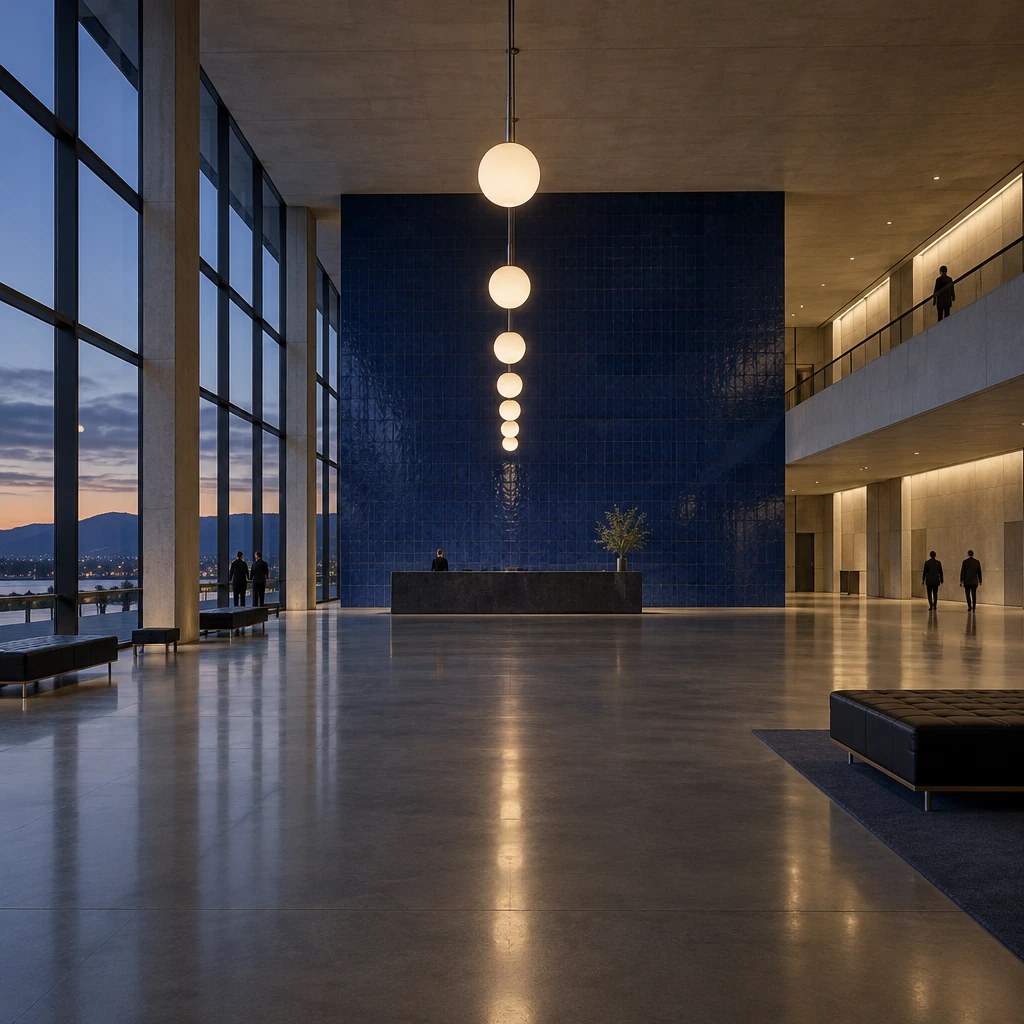
On a good day I leave through the main hall when the lamps are on, past the desk and the blue wall, and think about the people who will walk through it for the first time because of something I wrote. There will be a lot of them. That’s what I’d most like you to know about the job: there’s room.